Summarize this article with:
TL;DR
🎯 SEO optimises your site to appear in search results for your customers' queries.
✅ It is the most durable lever in digital marketing: the traffic it brings does not stop when the budget stops.
💡 It feeds every other channel: content, advertising, social media, conversion.
01SEO in digital marketing
Search engine optimisation (SEO) consists of optimising a website to improve its ranking in search engine results pages (SERPs), which can help you reach potential customers and support your digital marketing efforts.
Search engine optimisation (SEO) is an integral part of a company's digital marketing strategy, but it can sometimes be forgotten or put on the back burner in favour of quicker wins and more revenue-generating initiatives. This situation is quite common in small and medium-sized enterprises, which may not have the resources to invest in a long-term marketing strategy such as SEO.
It can also be hard to convince stakeholders and decision-makers of the importance of SEO in Ivorian companies, because it is not easily linked to specific financial figures. In addition, many people do not really understand what SEO is and how it can contribute to a company's online presence.
02What is digital marketing?
Digital marketing means companies using digital channels and levers to promote a product, service or brand in order to reach their marketing goals. Digital marketing is becoming increasingly important for companies, as more and more consumers use digital channels to make their buying decisions. Through digital marketing, companies can reach a wider, more international audience, target specific markets (for example by demographics), track and analyse consumer behaviour, and increase brand awareness, sales and revenue.
Digital marketing techniques include:
- search engine optimisation (SEO)
- paid advertising (PPC)
- social media marketing (SMM)
- content marketing
- email marketing
- influencer marketing
03What is SEO?
SEO is a set of practices designed to improve the appearance and positioning of web pages in organic search results. In other words, SEO consists of optimising your website's presence on search engines through various tactics. As organic search is one of the best ways for internet users to discover your website, a good SEO strategy is necessary to increase traffic to your website.
04What are the goals of SEO?
If your company does not have a website, chances are you are missing out on all the benefits that search engine rankings can bring your business. If you have a website, a distinct online presence offers more opportunities to increase your company's visibility online, among many other advantages. The role of SEO in your company's digital marketing can be as follows:
1/ Strengthen your online authority and credibility
SEO can help strengthen your online authority and credibility, because the higher your website ranks in search engines, the more trustworthy your company appears to both your target audience and search engine crawlers. This can strengthen brand reputation and encourage visitors to trust and engage with it.
2/ Improve your website's search engine ranking
By optimising your website's content, structure and technical aspects, SEO improves its ranking in search engines. A better ranking translates into greater visibility and more traffic, which can mean more prospects and sales. This goal can be reached through several tactics, such as keyword research, on-page optimisation, technical optimisation and link building.
3/ Gain organic traffic to the website
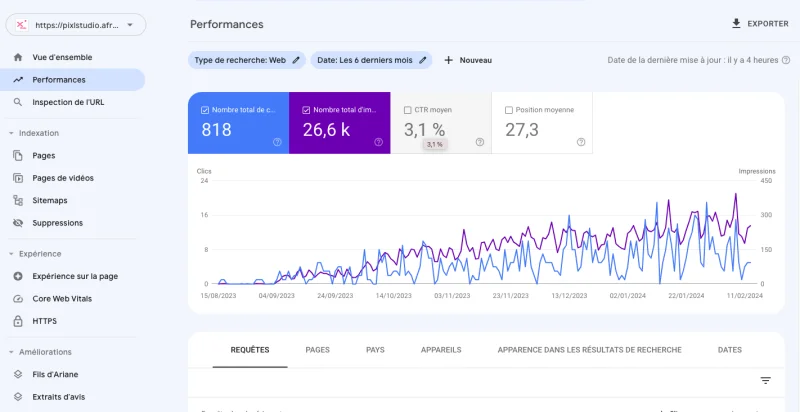
SEO can be used as a customer acquisition tool. By running an effective SEO campaign, you help attract traffic to your website by improving your visibility on search engines, in other words your ranking position. This traffic can then be used to convert these new visitors into customers, subscribers or followers.
4/ Improve the user experience
It consists of optimising a website's structure, content and navigation, which can improve the user experience. Search engines such as Google place great importance on your website's accessibility. There is solid evidence that Google rewards accessibility when ranking websites, and it even has its own webmaster guidelines that websites can follow as best practices. By making your website accessible, you also ensure that every internet user who lands on your website has a decent user experience, including people with particular disabilities. This reduces bounce rates, increases user engagement and increases conversions.
5/ Outperform your competitors
SEO can help your company gain a competitive advantage over its rivals. This can mean more current content through keyword research, a better website experience through accessibility best practices, a better SERP ranking, greater brand awareness and, ultimately, more targeted, more convertible traffic.
6/ Maximise return on investment
SEO is a cost-effective digital marketing strategy that can generate a high return on investment when done well. SEO offers long-term benefits, because once you reach a high position, you can keep receiving prospects (as long as you can compete for that position). By generating more organic traffic and prospects, SEO can contribute to a brand's revenue growth and bottom line.
05Different types of SEO optimisation in digital marketing
On-page SEO
On-page SEO is the practice of optimising individual web pages to rank higher and earn more relevant traffic through search engines. On-page refers to optimising a page's content and its HTML source code.
Effective on-page SEO helps users quickly find answers to their questions. The ultimate goal of on-page SEO is to make it as easy as possible for search engines and users to understand a web page's content, identify whether that page is relevant to a search query, and find that page useful and worthy of ranking at the top of the SERPs.
Key elements of on-page SEO include creating high-quality, relevant, linkable content, effective use of keywords, optimising title tags, URLs, meta descriptions, image alt text and much more.
Off-page SEO
Off-page SEO refers to optimisation techniques implemented outside your own website. The goal of off-page SEO is to get search engines and internet users to consider your website a reliable source, strengthening its authority and credibility.
This can look like link building, social media marketing, guest blogging, influencer marketing and other promotional activities to help improve your website's search engine ranking. Backlink building is at the heart of off-page SEO, because search engines use backlinks as an indication of the quality of the linked content.
A website with many high-quality backlinks will generally rank higher than other websites with fewer, lower-value backlinks. When actively building links, it is important to avoid "black hat" activities and focus instead on organic link building.
Technical SEO
Technical SEO is the process of optimising a website's technical aspects to improve its visibility and ranking in the SERPs. Improving technical aspects can help search engine bots crawl your website more efficiently and improve your site's usability. It is all very well having well-thought-out, useful content, but if a search engine cannot crawl your website, very few people are likely to see it.
A technically optimised website is fast, easily crawlable by search engines, has limited duplicate content, a wide variety of links, is secure (for example, HTTPS is implemented), uses robots.txt, has structured data and more. Having an XML sitemap is a plus and can greatly improve how search engine bots crawl and find your website's content.
Local SEO
Local SEO consists of optimising a company's online presence to improve its visibility in local organic search results. Any company with a physical location or serving a particular geographic area can benefit from local SEO.
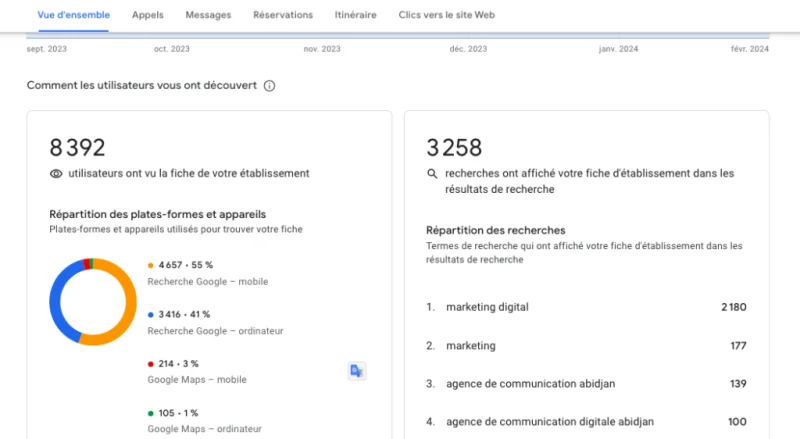
Search engines rely on a number of signals to rank local businesses, such as website optimisation, local content, social profile pages, links, citations, local business listings and managed reviews. Having a Google Business Profile is also essential if you really want to optimise your local search. When done well, local SEO lets users quickly and easily find information about your business, which is a win for both sides. Clearly, local SEO should not be ignored!