Summarize this article with:
In a world where online presence is paramount, digital marketing and social media marketing are often used interchangeably. Yet although these concepts are related, they are not identical. Digital marketing covers a wide range of strategies, while social media marketing focuses specifically on social platforms. So what are their differences? Which one best suits your needs? This article will help you understand these two disciplines, their differences and how they can work together.
TL;DR
🎯 Digital marketing covers every online channel: website, SEO, advertising, email, content, social media.
✅ Social media marketing is just one component of it, focused on social platforms and community.
💡 The two work together: social networks create attention, the rest of the system turns it into customers.
01What is digital marketing?
Digital marketing refers to all the strategies used to promote products or services through digital channels. It includes varied techniques that reach consumers at different points in their buying journey.
Main components of digital marketing:
- SEO (Search Engine Optimization): optimising for search engines to improve website visibility.
- SEM (Search Engine Marketing): paid advertising on Google and other search engines.
- Email marketing: sending promotional campaigns by email.
- Content marketing: creating blogs, videos and infographics to attract and engage audiences.
- Display advertising: graphic ads on websites and apps.
- Affiliate marketing: partnerships with other sites or influencers to promote products.
- Mobile marketing: strategies focused on smartphone users, such as push notifications and SMS marketing.
Digital marketing is not limited to social media. It also includes SEO, email marketing, online advertising and many other methods of reaching a target audience.
02What is social media marketing?
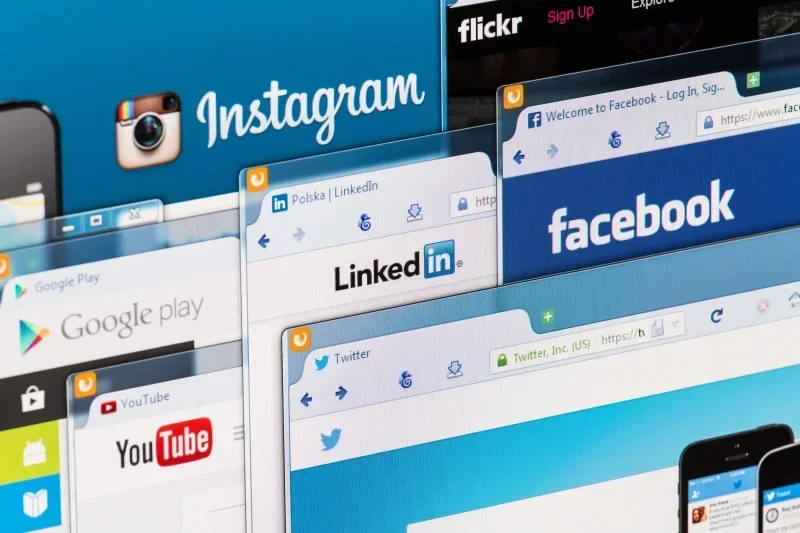
Social media marketing (SMM) is a subcategory of digital marketing that uses social platforms such as Facebook, Instagram, Twitter, LinkedIn and TikTok to promote brands, generate engagement and convert prospects into customers.
Key elements of social media marketing:
- Content creation: posts, videos, stories and other formats adapted to social platforms.
- Social media advertising: Facebook Ads, Instagram Ads, LinkedIn Ads, TikTok Ads, etc.
- Community engagement: interacting with followers, replying to comments and direct messages.
- Influencer marketing: collaborating with influencers to promote a brand.
- Social listening: monitoring conversations and trends related to the brand on social networks.
- Analytics and reporting: tracking campaign performance with tools such as Facebook Insights and Google Analytics.
Social media marketing is a component of digital marketing, but it focuses exclusively on social networks.
03Key differences between digital marketing and social media marketing
Although both ultimately aim to promote products and services online, their approaches and tools differ.
Tools and metrics
Digital marketing relies on tools such as Google Analytics, Search Console, advertising platforms and email tools, with metrics like organic traffic, cost per acquisition and conversion rate. Social media marketing uses the platforms' native tools (Meta Business Suite, LinkedIn Analytics, TikTok Analytics) and measures reach, engagement rate, follower growth and community interactions.
04How do they work together?
Digital marketing and social media marketing are not opposed; they complement each other. A company that wants to maximise its online visibility must integrate both strategies to get the best results.
Examples of complementarity:
- SEO and social media: good SEO improves the visibility of content published on social networks.
- Digital advertising and social ads: a Facebook Ads campaign can be combined with Google Ads for wider coverage.
- Content marketing and social media: a blog article can be shared on LinkedIn and Instagram to maximise its impact.
- Email marketing and social media: brands can capture email addresses through social campaigns and then convert them through emailing.
By combining these two approaches, companies optimise their reach and conversions.
05Conclusion
Digital marketing and social media marketing are two essential aspects of online marketing. While digital marketing covers every digital strategy, social media marketing focuses solely on social platforms.
Key points recap:
- Digital marketing is a broad approach including SEO, online advertising, email, etc.
- Social media marketing is a strategy specific to social networks.
- The two disciplines use different tools and metrics.
- The careers are distinct but related.
- An effective digital strategy combines both approaches to maximise results.
If you are a business, the ideal is to adopt a hybrid approach for optimal online visibility: contact our communication and digital marketing agency.